Water Heater Leak in Spring Mill: Emergency Cleanup and Cost
A leaking water heater can dump 40 to 80 gallons across your floor in under an hour, and the damage rarely stops at the puddle you see. Water wicks under baseboards, soaks subfloor, and travels along joists into finished rooms below. If you are in Spring Mill and water is spreading right now, the fastest path to a smaller repair bill is shutting off the supply, killing power to the unit, and calling a certified restoration crew before the moisture sets.
Spring Mill Water Restoration has handled water heater failures across Central Indiana since 2018, from quiet slow drips in attached garages to tank ruptures in second floor utility closets. We are BBB A+ rated and IICRC certified, which means we follow the industry drying standard (S500) rather than guessing. If your situation is small enough to handle yourself, we will tell you. If it needs professional extraction, structural drying, and an insurance ready moisture map, we will walk you through that too.
This guide gives you a scannable answer set: what to do in the first 15 minutes, what professional cleanup actually includes, realistic cost ranges in Spring Mill, and how insurance typically responds to a sudden water heater discharge.
Quick Answer: What to Do Right Now
If your water heater is actively leaking in Spring Mill, take these steps in order before anything else:
- Shut off the cold water supply valve directly above the tank.
- Turn off power at the breaker (electric) or set the gas valve to OFF.
- Move boxes, electronics, and stored items off the wet floor.
- Photograph everything for your insurance claim, including the tank label.
- Call a 24 7 restoration team if water has reached drywall, carpet, or a finished room below.
Standing water on hard floors longer than 24 hours typically pushes a Category 1 (clean water) loss into Category 2 territory, which costs more to remediate.
Professional Cleanup: What Spring Mill Water Restoration Actually Does
An emergency response in Spring Mill usually arrives within 2 hours. Here is the typical sequence:
| Phase | Action | Typical Timeframe |
|---|---|---|
| 1. Assessment | Moisture mapping with meters and thermal imaging | within 2 hours |
| 2. Extraction | truck mounted or portable units pull standing water | 1 to 3 hours |
| 3. Demo (if needed) | Remove saturated drywall, baseboard, wet insulation | 2 to 4 hours |
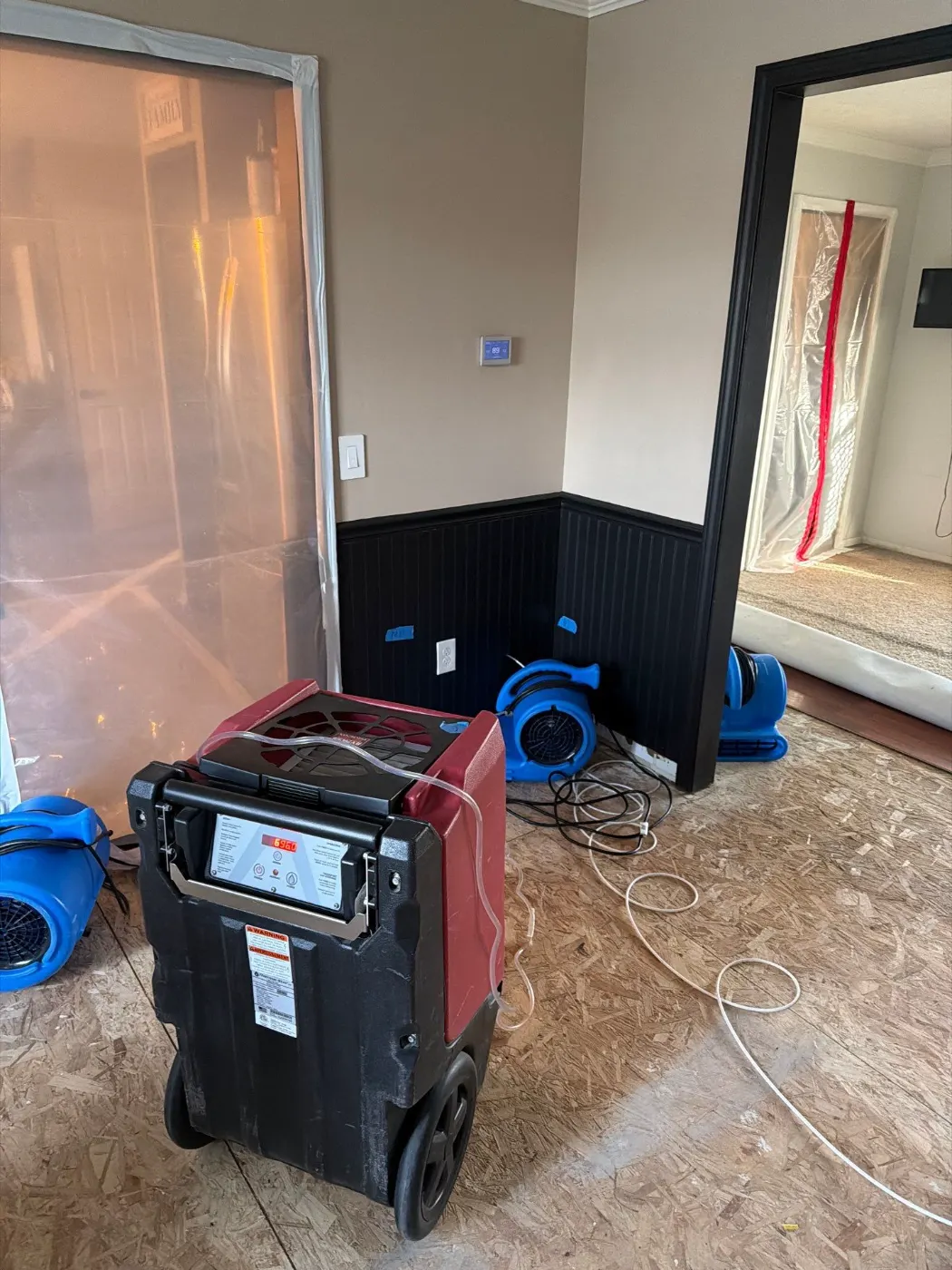
| 4. Structural drying | Air movers and dehumidifiers placed per S500 | 3 to 5 days |
| 5. Monitoring | Daily moisture readings until dry standard met | Daily visits |
| 6. Reconstruction | Drywall, paint, flooring replacement | 1 to 3 weeks |
If the failure pushed water into a finished basement, the work overlaps heavily with basement flooding cleanup, including subfloor inspection and possible flooring removal.
Insurance: What Usually Gets Covered
Sudden and accidental water heater discharge is generally a covered peril on standard HO-3 policies. What is typically covered:
- Water removal and structural drying
- Damaged flooring, drywall, baseboards, and personal property
- Mold remediation if mold is a direct result of the covered loss
- Reasonable additional living expenses if the home is unlivable
What is typically not covered:
- The water heater itself (this is wear and tear)
- Long term seepage discovered weeks later
- Damage from a leak you knew about and ignored
- Code upgrades required during reconstruction (unless you carry ordinance coverage)
Spring Mill Water Restoration documents every loss with moisture readings, photos, and an itemized scope written in language adjusters recognize. If your claim gets stuck, we can speak directly with the adjuster on your behalf. Bring your declarations page to the first walkthrough so we can confirm deductible, coverage limits, and any water damage sub limits before the scope is written.
If Your Water Heater Is Leaking Right Now
Every story in this post started with a homeowner who picked up the phone. Whether your tank is dripping, weeping, or actively flooding, the next hour shapes the next month. Spring Mill Water Restoration answers calls around the clock across Spring Mill, arrives with IICRC certified technicians and calibrated moisture meters, and gives you a straight read on what the damage is and what it will cost. No upsells, no scare tactics. If the job is small enough to handle yourself, we will tell you. If it is not, we will be on your driveway before the water reaches the next room.
Preventing the Next Leak
Once the cleanup is finished, a few small habits keep the new tank from becoming the next emergency. Drain a few gallons from the tank every six months to flush sediment. Test the T&P valve annually by lifting the lever and confirming it reseats cleanly. Install a simple battery powered water alarm at the base of the tank, or a smart leak sensor that notifies your phone. For Spring Mill homes with the heater above a finished space, a drain pan piped to a floor drain or exterior is cheap insurance against the next failure.
Mistakes That Make the Bill Bigger
- Running box fans on wet carpet without dehumidification (spreads moisture into walls)
- Tearing out drywall before documenting the loss
- Waiting 48+ hours to call, which can trigger mold within 72 hours
- Skipping moisture testing on adjacent rooms
- Replacing flooring before subfloor is verified dry
- Throwing away damaged items before the adjuster sees them
- Accepting a verbal estimate instead of a written scope
Why Water Heater Leaks Cause More Damage Than Homeowners Expect
The average residential tank holds 40 to 80 gallons under city water pressure. When the tank wall fails or a fitting cracks, the supply line keeps feeding the leak until somebody closes the valve. Even a slow pinhole leak releases water continuously, and most water heaters sit in closets, garages, or utility rooms where nobody notices for days.
Common failure points
- Corroded tank bottom (typical at 8 to 12 years of age)
- Failed temperature and pressure relief (T&P) valve
- Loose or rusted supply line fittings
- Cracked drain valve at the base
- Sediment buildup causing internal stress fractures
- Anode rod fully consumed, accelerating internal rust
- Expansion tank failure on closed systems
Where the water travels
- Under vinyl plank and laminate flooring
- Into baseboards, drywall bottom plates, and insulation
- Through floor penetrations into basement ceilings
- Along HVAC ducting and floor joists
- Into wall cavities behind nearby cabinetry
For deeper detail on the broader process, our guide on water damage restoration cost breaks down line items by category and class.
Warning signs before a full failure
Most tanks give signals weeks before they rupture. Rusty water at the hot tap, popping or rumbling noises during heating cycles, moisture pooling under the burner access panel, or a faint metallic smell in the utility room all suggest the tank is near end of life. A small puddle that dries between inspections is still a leak. Replacing a 10 year old tank on your schedule costs a fraction of an emergency call after a midnight rupture.
Real Cost Ranges in Spring Mill
Costs depend on water volume, materials affected, and how long the leak ran before discovery. Use these ranges as a planning estimate, not a quote:
| Scenario | Typical Cost Range |
|---|---|
| Small leak, contained to garage slab | $500 to $1,500 |
| Tank rupture, one room affected | $2,000 to $4,500 |
| Upstairs heater, ceiling damage below | $4,500 to $9,000 |
| Multi room loss with hardwood and drywall demo | $8,000 to $18,000 |
| Category 2 loss (sat over 24 hours) | Add 25 to 40 percent |
Replacing the water heater itself runs separately, typically $1,200 to $2,800 installed in the Spring Mill area for a standard 40 to 50 gallon tank. Tankless conversions run higher, often $3,500 to $6,000 once gas line and venting upgrades are factored in. Hardwood refinishing, if cupping is caught early, can sometimes substitute for full replacement at roughly half the cost.
Frequently Asked Questions
How long do I have before water heater damage becomes mold?
Mold can start colonizing wet materials within 24 to 48 hours. In Spring Mill basements with poor airflow, it happens on the faster end. Spring Mill Water Restoration aims to be on site within 60 to 90 minutes to beat that window.
Will my homeowners insurance cover a water heater leak?
Most Spring Mill policies cover sudden and accidental failures, including burst tanks and ruptured supply lines. Gradual leaks that show signs of neglect are usually denied. Spring Mill Water Restoration can help document the failure to support your claim.
Should I replace or repair my leaking water heater?
If the tank itself is leaking, replace it. Tanks rust from the inside and cannot be patched. If a valve or supply line failed, repair is fine. Units over 10 years old are usually worth replacing regardless.
Can I dry the area myself with fans?
Household fans move air but do not remove moisture from the structure. Without commercial dehumidifiers and moisture monitoring, water stays trapped in subfloors and wall cavities. That is where mold starts.
How much does Spring Mill Water Restoration charge for an emergency assessment in Spring Mill?
On-site assessments for active water emergencies in Spring Mill are free. You get a written scope and price before any work starts, and we bill insurance directly when your claim is approved.
Have a restoration question?
Our IICRC certified Spring Mill crew is ready to help. Free assessments, estimate based on what we can sees, no pressure.